ZEOPLAST
Description
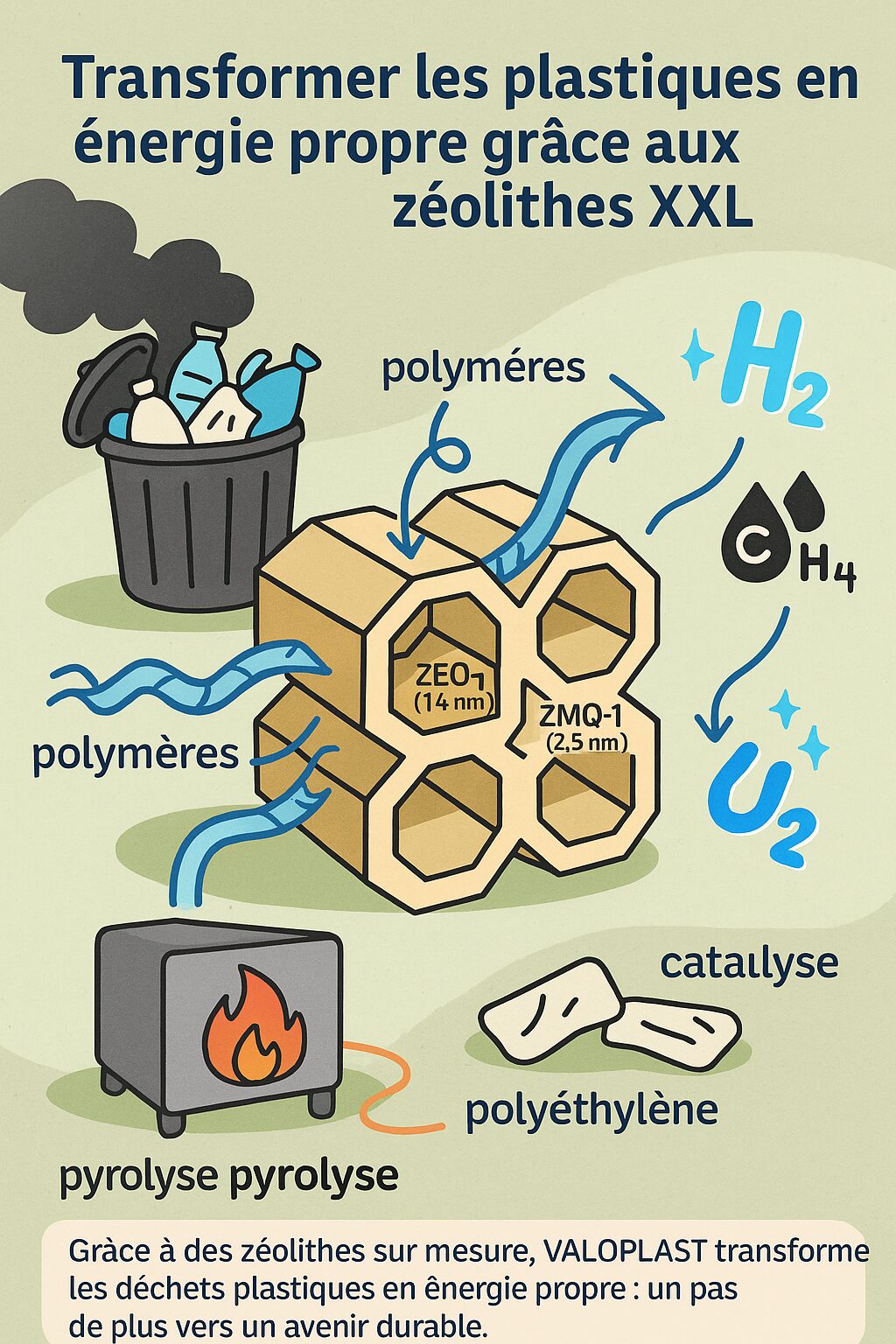
Zeoplast is a green project focusing on preparing metallic-functionalized zeolite- based catalysts for hydrogen production from plastic waste disposals. The project aims to produce a green energy gas carrier, hydrogen and the side product will be carbon black, from plastic wastes disposals. These latter represent tremendous ecological problems nowadays for our society since they are unfortunately not biodegradable. At the same time, the residual materials which is carbon black have also a commercial value as it is used in different daily applications (green tires, building insulation, etc.). As a first step, two different types of zeolite will be home made under two different forms (micron- and nano- sized): ZSM-5, BEA. Commercial USY samples with different Si/Al ratios will also be employed in the study. In addition to their role as acid catalysts, ideal for plastic cracking and reforming, the zeolites will be the support for finely disperse and immobilize metal particles necessary for the dehydrogenation reactions. The second step include the metal incorporation in the zeolite matrix. Three different types of metal will be investigated: Pt, Fe, and Ni. The incorporation of the metal will be performed using two different methods: i) in situ synthesis, and ii) recipient wetness impregnation. The catalysts will be characterized in detail using a set of complementary techniques such as XRD, SEM, TEM, sorption analyses, ATG/ATD, and IR, Raman and solid-state NMR spectroscopies. In the third step the set of elaborated catalysts will be first tested (for screening and optimization) in the reforming of commercial polyethylene/polypropylene pellets, the two major components of plastic wastes, and then on real waste disposal