HiZeCOKE
Description
The next few decades are likely to witness a gradual shift from an economy strongly based on crude oil to more diverse sources of energy and chemicals. Hydrocarbons, obviously remain essential for many areas of chemistry. However, synthetic hydrocarbons can be derived from methanol and ethanol via the so-called METH (Methanol/Ethanol to Hydrocarbons conversion) processes. The implementation of an economically-viable methanol economy will however depend on the development of new or improved catalytic processes and more efficient catalysts.
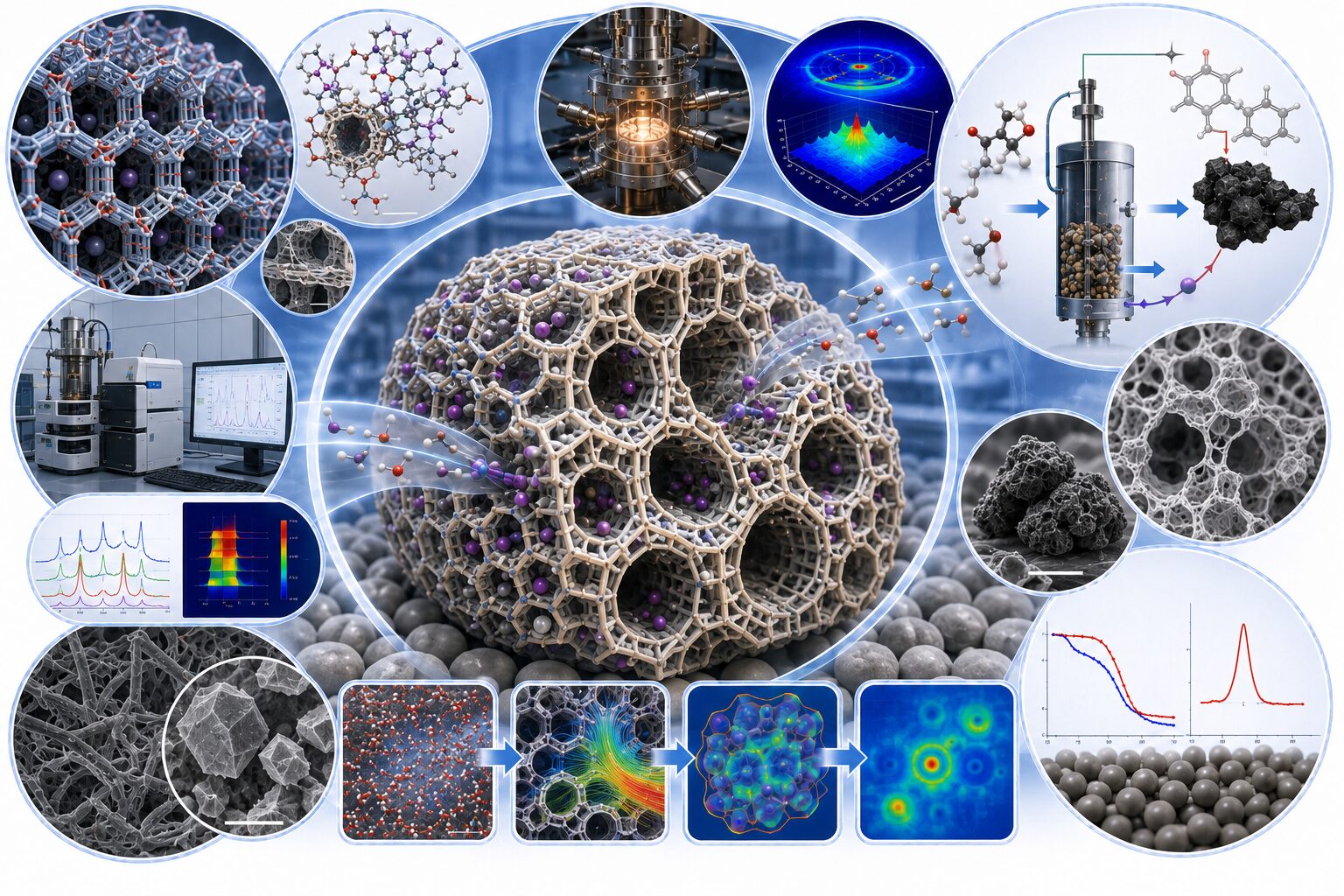
The main objective of the « HiZeCoke » project is to understand the detailed relationships between the textural and acidic properties of hierarchical porous zeolites and their catalytic performances, in particular the resistance to deactivation by carbonaceous deposits. The modeling of the activity of hierarchical porous materials and their mode of deactivation is of paramount importance for a rational design of improved METH catalysts.
This important topic is currently studied by many foreign groups and a few papers have recently been published on this subject. However, the overall understanding of the properties of such materials is still very sketchy. A number of key questions remain to be answered, for instance:
• Is the catalytic activity improvement a mere consequence of the mesoporosity created?
• What is the effect of the synthesis or post synthesis procedures on the nature, quantity and location of defects in zeolite framework (silanol nests, extra-framework Al, distribution of Al between the micro- and mesoporous networks …)?
• What is the role of the external and mesoporous surfaces on the performances?
• What is the relative role of the mesopores on the coke formation and its nature?
• How is the adsorption and diffusion of reactants/products affected by the newly created mesoporosity ?
• To which extent is there a modification of the acidic properties (concentration, strength, location) during the creation of mesopores?
• How many active sites are working during the catalytic reaction on the various catalysts?
• Is it possible to control and engineer the size of the mesopore in post synthesis treatments like desilication?
Designing model materials with controlled external surface activity and active sites distribution will help to answer these crucial questions. Namely, we will have to provide a clear distinction between external (i.e., formed in the mesoporous or external crystal surface) and internal coke (inside the micropores) and their relative impact on the performance of the catalyst. This will result in a further improvement of the catalyst performances (time on stream, conversion and selectivity). In the course of the project, we expect that catalytic testing, coke analysis and combined spectroscopic approaches to understand the origin of catalyst deactivation will greatly help designing efficient, stable and selective catalyst for METH reactions.